
How to Organize a Small Tackle Box
Sort by depth and job so the right lure is visible when the bite changes.
A useful tackle box is a decision tool, not a collection display. Each compartment should answer where the fish might be and how you want the lure to move.
"Good fishing gear earns its place by solving a real problem before the next cast."
Group lures by running depth
Keep surface, shallow, mid-depth, and bottom presentations together so depth changes are easy to make.
Separate terminal tackle
Small hooks, swivels, and weights need closed compartments or their own sealed organizer. Loose metal parts quickly turn one tray into clutter.
Dry before closing
After rain or spray, open the box and let every compartment dry before storage to reduce rust and odor.
Quick takeaways
- Organize by lure job and running depth.
- Give terminal tackle its own sealed space.
- Dry boxes open after wet trips.
Tackle mentioned in this story
Editor-picked, ready for the next session.
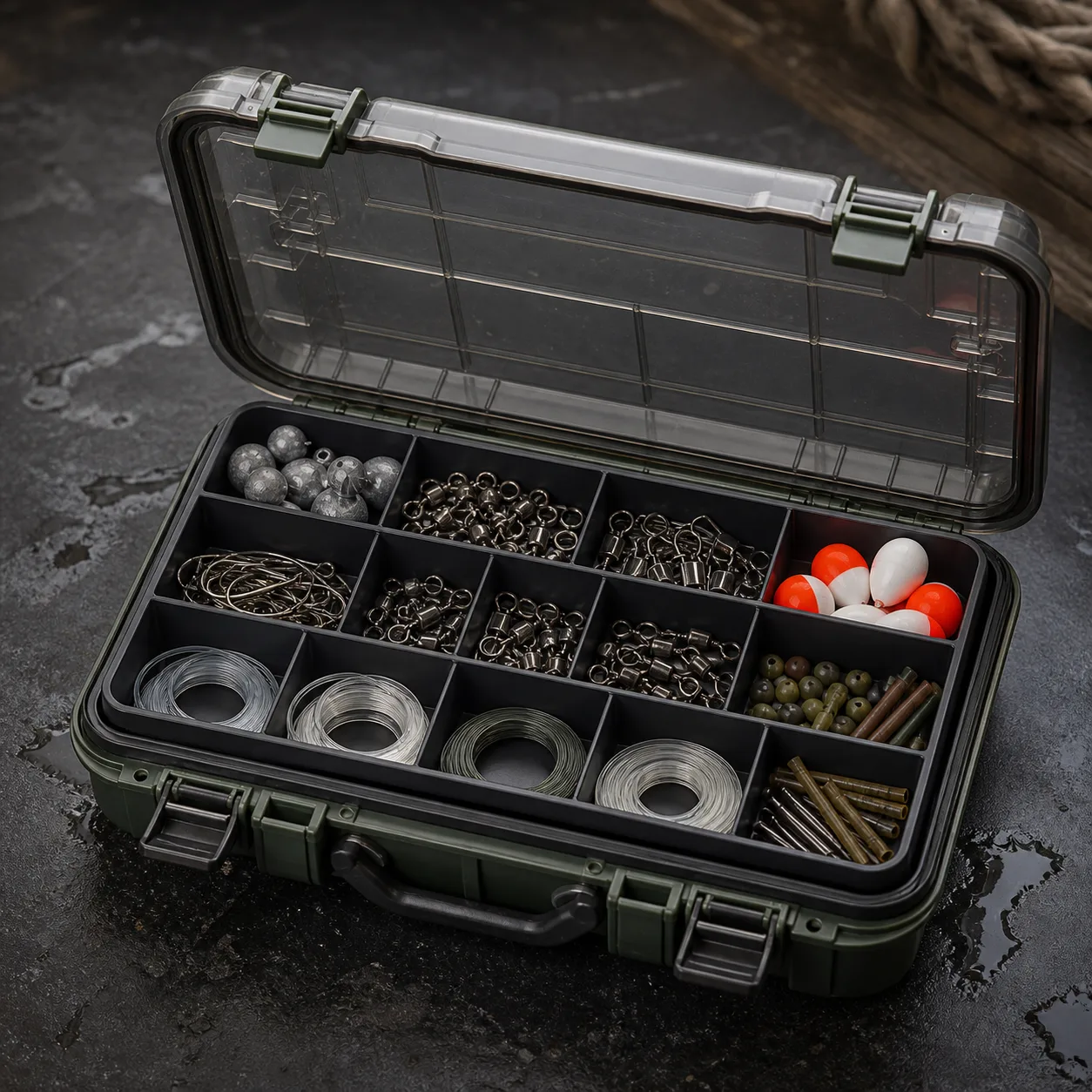
A gasket-sealed box with flexible trays for lures, leaders, and tools.
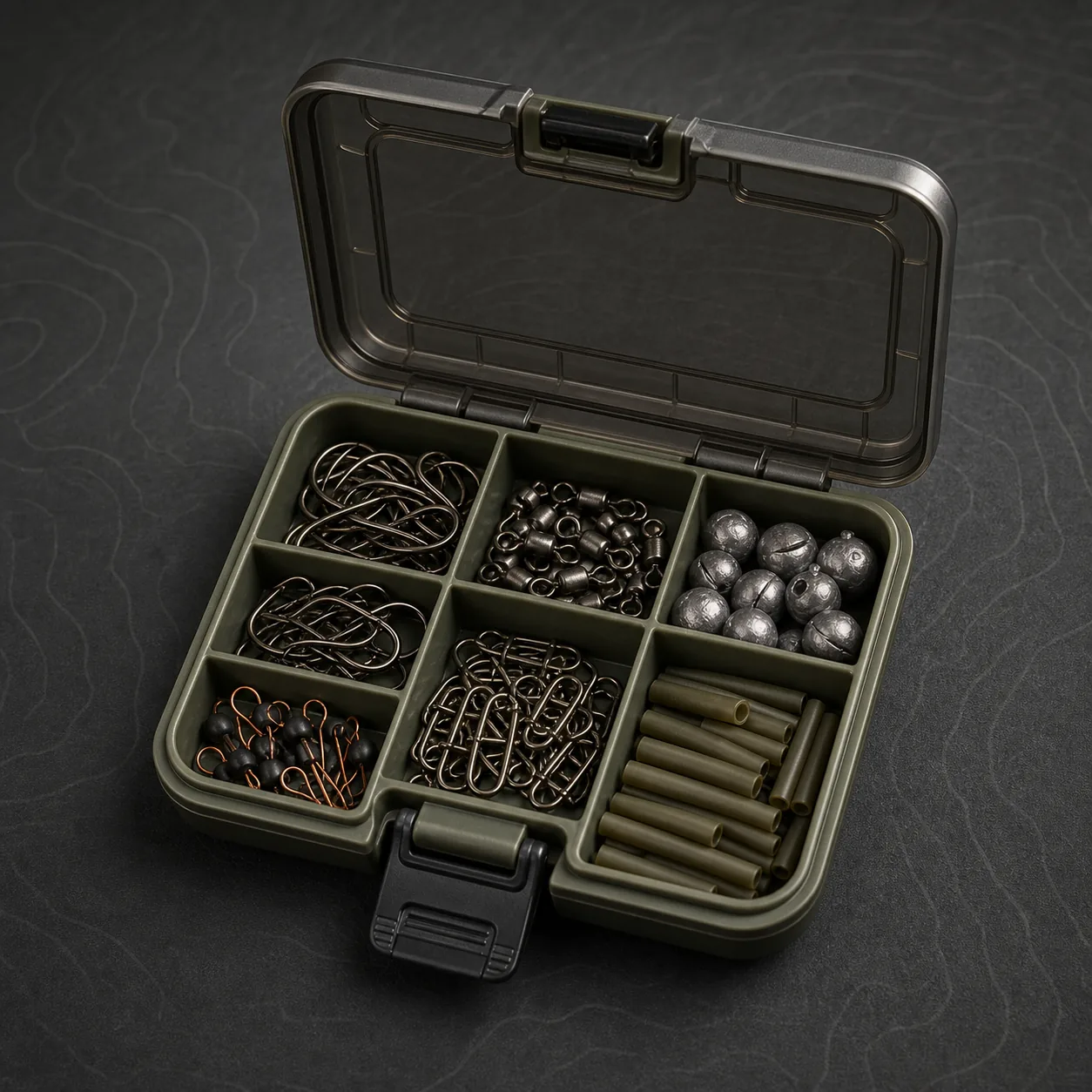
Hooks, swivels, sinkers, floats, and leader parts in one sealed organizer.
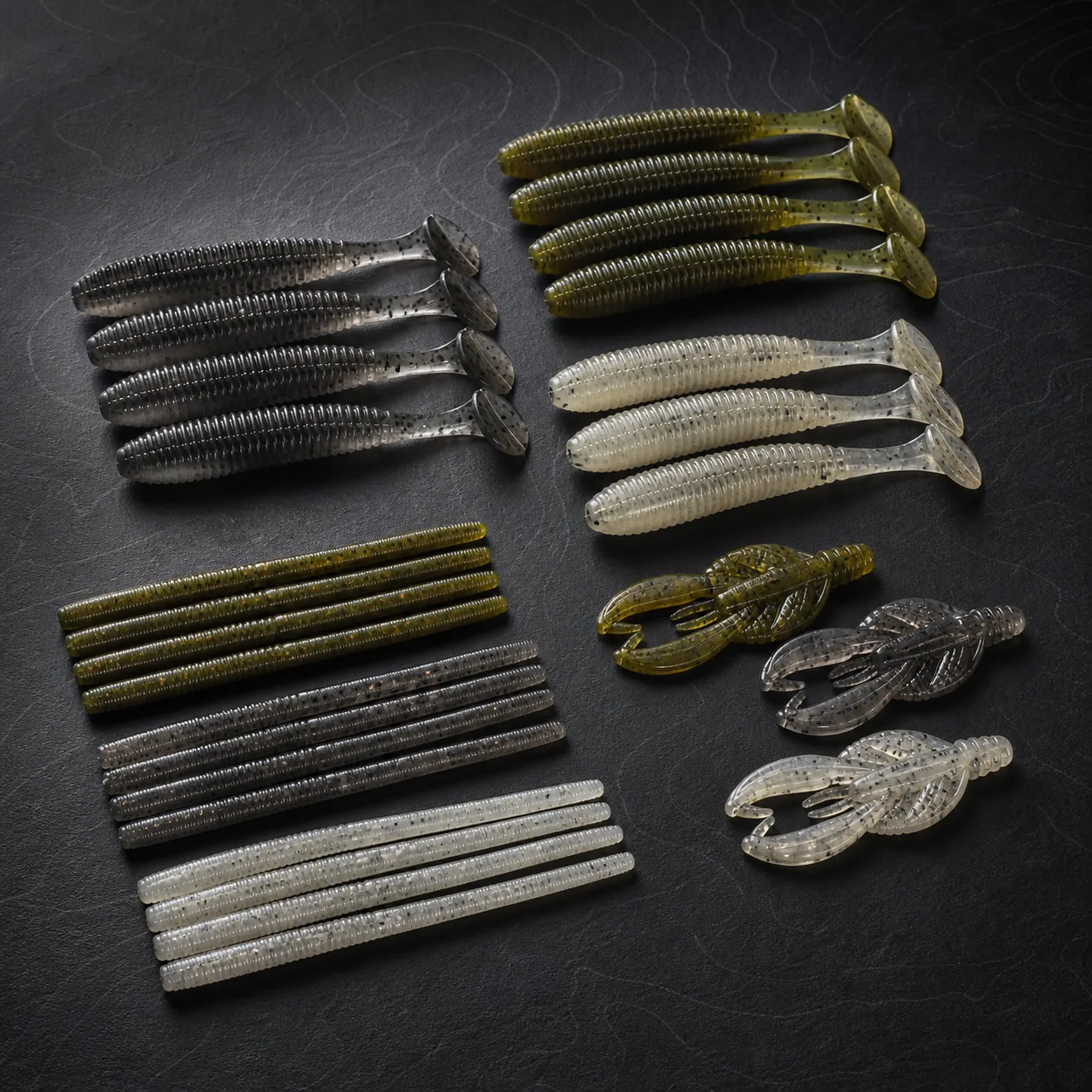
Natural-action worms, craws, and paddletails in dependable water colors.
Some links may be affiliate links. We may earn a commission at no extra cost to you.